Seven Reasons Why I Do Most of My Poetry Writing on a Manual Typewriter

PhotoGrid_1471034689155[1]

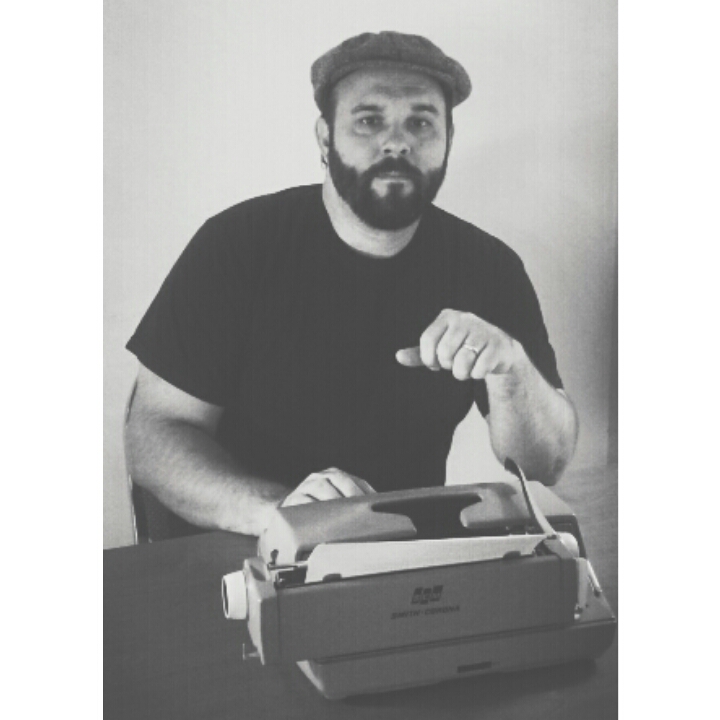
Luke Austin Daugherty’s old Royal Mercury Typewriter with the poem, Straight Corn Whiskey (100 Proof), on deck. Copyright 2016, Luke Austin Daugherty, All Rights Reserved

“One evening, I thought, ‘I’ll toss a sheet of paper in the old typewriter and maybe do a bit of writing on it, just for the hell of it, before listing it on ebay.’ I sat down in my garage and typed a fresh poem on that avocado-green, human-powered machine and I was hooked.”

I’ve wanted to cover this topic on my blog for a while and I got a handy kick in the ass today to get it written about. An old friend sent me a copy of The Typewriter Revolution in the mail and it just arrived. I am nigh to salivating over the book and can’t wait to read it over the next few weeks.

Before I digest that beckoning book, I want to give you my own writing on a manual typewriter “whys” before they are perhaps influenced, amended, or added-to after reading Richard Polt’s worthy, full-length volume on the topic of the present resurgence of interest in typewriters.

For a bit of personal history, we had an old manual in our home when I was little. I don’t remember the model. But, I liked playing around on it from time to time. My grandparents’ on my dad’s side, who lived just down the street, had a 70’s electric as well. My first typing and some early school assignments were done on those two typewriters. In middle school, our typing classes were still done on IBM Selectrics. “Fingers on the Home Row, kids!” If you are my age or younger, you likely remember the drill. Though, we did have a separate intro computer class as well.

PhotoGrid_1471035024813[1]

A happy birthday letter that I wrote (a day early) on our home typewriter for my dad when I was 7 1/2.

As I went through my teens, my use of typewriters diminished for the most part with the increase of the number of computers that I had access to at school, and eventually at home when I was in high school— some kind of Mac laptop, as I recall, that my mom’s job hooked her up with.

Typewriters, for about a decade and a half, went the way of the dinosaur (and VCRs) in my life. (Though, we now have a VCR at home again and use it more than our DVD player, but that is for another blog.)

As a poet during my adult life, the vast majority of my early writing was pen-to-paper style, even after having home computers. Before starting my own company eight years ago, I was always on the go as a driver in the moving industry, so an old-school journal and pen was the best combination for me as a writer. But, I type a lot faster than I (sloppily) write, so once I got my first laptop about seven years back, laptop-ing replaced hand writing as my primary mode of getting poems out of my head and into visible words for a handful of years.

Then, as I was picking for our ebay store a few years back, I ran across a 60’s Smith-Corona Super Sterling manual in the original case for ten bucks. I checked it out and all the keys worked well. The ink ribbon was old, but still intact too. At first, I figured that I’d just pick it up and resell it on ebay. Yet, Mr. Smith had other plans for me…

“I typed this poem on a 60’s Super Sterling

Because it had a bigger set of balls than any laptop ever invented”

-from the poem To the Reader in my new book Low Shelf Angels

One evening, I thought, “I’ll toss a sheet of paper in the old typewriter and maybe do a bit of writing on it, just for the hell of it, before listing it on ebay.” I sat down in my garage and typed a fresh poem on that avocado-green, human-powered machine and I was hooked. Since then, I’ve found other manuals and have about seven now. My favorite overall and the one I have used the most in the last year is one of two Royal Mercury portables that I own. The reasons I fell back in love with writing on a manual typewriter that first night are all reasons I still love writing on a typewriter today, plus I’ve found a few more. They are as follows:

  1. Mistakes cost you something- If you type a bad line or just mess up when typing on a laptop, no harm, no foul. Hit backspace and erase your keyboarding sins. Even if your keyboarding transgressions are vast, then highlight multiple lines and delete. But, on a typewriter, your fuck-ups will take a bit of effort to fix. From spacing issues, to typos, to content that needs repair— you’ll have to work to get it all fixed again and your lines aligned back properly.

Hence…

  1. Writing each line on a typewriter requires more thought- Since I don’t want to spend a bunch of (sometimes frustrating) time fixing things on my page, I must be MUCH more intentional when writing via old, mechanical metal rather than new, digital plastic.
  2. There are fewer distractions when writing on a manual typewriter- I don’t worry about plugging in, battery level, screen brightness, notifications popping up, or if Wi-Fi is available. I just write. Plain and simple. If my ribbon runs out to the end, I just spin that mo-fo backward or flick the direction switch and use it again if I don’t have a new ribbon to put in or want to mess with it.
  3. I have an instant, permanent copy of my poems- When my page is typed, no need to save or back up the data. I have the hard copy. Less getting lost, my grandkids will still have that page someday. Being typed on paper with my typewriter is always the best origin story for my poems.
  4. My manual typewriter is uber-portable and utilitarian- A typewriter has but one job, to type text. My typewriter types in the cold, it types in the heat, it types early, it types late, it types if I spill cheap brandy on it, it types if I’m home with the lights on, and it types if I’m out in the woods with no available electricity just the same. It has one job and it does it well. It isn’t multipurpose. If I want a do-it-all device, I have my Android in my back pocket. When I want to write poetry, dammit, give me my typewriter
  5. You must be rougher writing with a manual typewriter than with a laptop- Typing on an old manual takes a hell of a lot more effort than typing on a laptop. You can be tough with a typewriter in a way that you can’t with a laptop. Even when writing pissed or frustrated, you have to dial back the aggression when keyboarding on your laptop, lest you slay it. With a typewriter, holding back from brutish key punching isn’t needed. The force required to make one letter appear on the average manual is (I’m guessing by how it subjectively feels to me) at least 10 times more than the average laptop keyboard. There is a real percussiveness to writing on an old manual. Perhaps that aspect of using manual typewriters would appeal more to the Patriarchy than the Matriarchy, but I dig it either way.
  6. You must learn something about the mechanics of your typewriter- A person can use a laptop, cell phone, or home computer for years and not know shit about how it actually works. Using a typewriter will force you to become at least an amateur typewriter mechanic just to keep it going. You’ll need to change ribbon, which is no big deal if you know how, but can seem like trying to perform brain surgery if you don’t. Little parts will fall off or break from time to time. Gluing and tweaking will be required. Cleaning will be necessary. And with decades of age, even two typewriters of the exact same model will perform differently. Every typewriter has its own personality. You have to get to know your machine. And once you do, no one will know it like you do.


All that said there is a time and place for everything. When writing in public at diners, bars, and such, I use my laptop, phone, or go back to my paper journal. I’m not trying to be “that guy” and whack away on my typewriter in my local coffee shop like some distracting tool just to be nostalgic and next-level hipster-cool while interrupting others’ study and conversations with my thousands of loud clacketyey-clacks. But hey, if that is your game, type away! To each his own 🙂

I also type my blogs on a laptop. I have no need to write them on paper first. So, I’m not an untainted manual typewriter purist. I use one when I want to and use my laptop when I want to. Just like Dad and Grandpa, I believe in using the right tool for the right job.

By the way, find the links grab my brand new, full-length poetry book Low Shelf Angels at www.lowshelfangels.com

_________________________________________________________________

As always, thank you for reading and sharing my blog! I am an independent poet, author, and singer/songwriter and I have my own ebay business to keep me as flexible as possible. But, writing takes time and if you appreciate what I do, if you have been moved or made to think by my writing, OR have just enjoyed something on my blog, please throw a buck or two in my tip jar!:) Your kind contribution may buy me a cup of coffee out at my next writing session. Click my easy paypal “tip jar” link that follows and THANKS! -Luke
LAD Online Tip Jar!

Low Shelf Angels is Now Available in Paperback and eBook

low shelf angels last version gimp cover nuvo logo layers

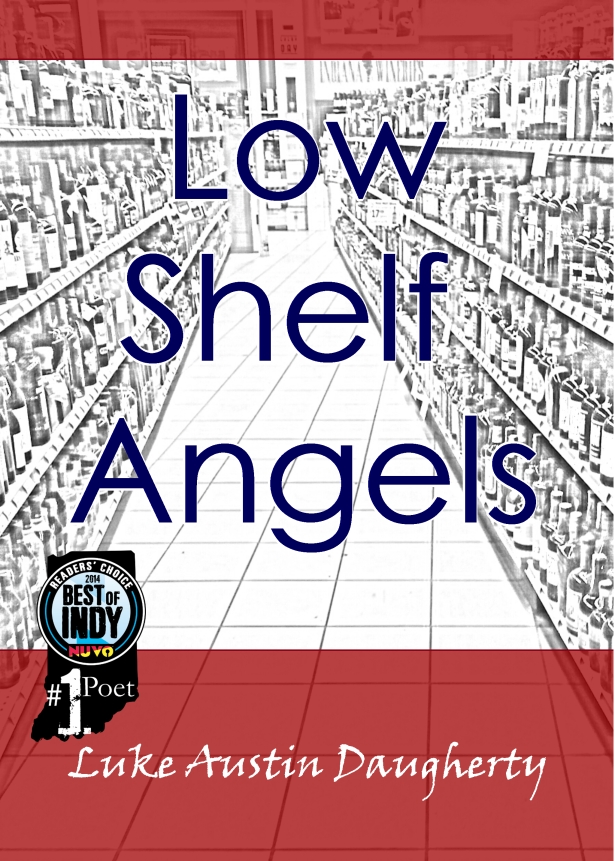
Low Shelf Angels, the new book of poetry by poet, singer/songwriter, and author, Luke Austin Daugherty. (front cover image) Copyright 2016- All Rights Reserved

My new book is now available! Get your paperback at this link: https://www.createspace.com/6414653

For the Kindle version (and also paperback), use this link: https://www.amazon.com/dp/B01J78YNO4

 From the rear cover: Low Shelf Angels is a collection of 72 poems that were written in greasy spoon diners, dive bars, old cars, thrift stores, a cold garage, on park benches, back porches, and sidewalks in several Midwestern states.

Luke Austin Daugherty is a poet, author, singer/songwriter, and ebay entrepreneur. Find him on WordPress, Instagram, Facebook, YouTube, and at his favorite local haunts around Indiana if you happen to be sipping hot coffee or cold beer in the same place at the same time.

www.lowshelfangels.com 

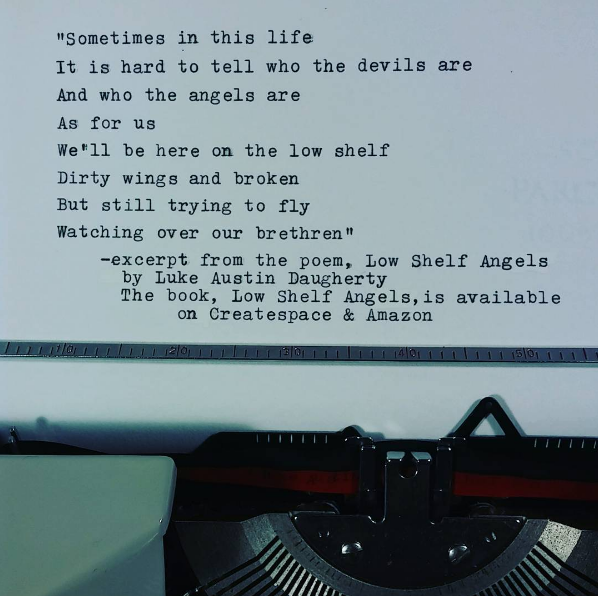
instagram excerpt low shelf angels 1

A short excerpt from the poem, Low Shelf Angels, in the book of the same name by poet, Luke Austin Daugherty. Copyright on the text and picture, All Rights Reserved 2016.

For more excerpts and daily posts, visit and/or follow my instagram at the link below!

Luke Austin Daugherty’s official instagram!

As always, thank you for reading and sharing my blog! I am an independent poet, author, and singer/songwriter and I have my own ebay business to keep me as flexible as possible. But, writing takes time and if you appreciate what I do, if you have been moved or made to think by my writing, OR have just enjoyed something on my blog, please throw a buck or two in my tip jar!:) Your kind contribution may buy me a cup of coffee out at my next writing session. Click my easy paypal “tip jar” link that follows and THANKS! -Luke

Luke’s Online Tip Jar!

LOW SHELF ANGELS IS COMPLETE! The Book Will be Available Soon!

IMG_20160725_202451[1]

LOW SHELF ANGELS IS COMPLETE! Tonight was my LAST proof tweaking session for the new poetry book, thus, I treated myself to some legit Waffle House chocolate pie to celebrate. Follow my blog and lowshelfangels.com (still being developed) for the final publishing info. The book will be available by the end of the month!

As always, thank you for reading and sharing my blog! I am an independent poet, author, and singer/songwriter and I have my own ebay business to keep me as flexible as possible. But, writing takes time and if you appreciate what I do, if you have been moved or made to think by my writing, OR have just enjoyed something on my blog, please throw a buck or two in my tip jar!:) Your kind contribution may buy me a cup of coffee out at my next writing session. Click my easy paypal “tip jar” link that follows and THANKS! -Luke

LAD online tip jar

The Part of “Love is the Middle” that I Can’t Read to My Kids

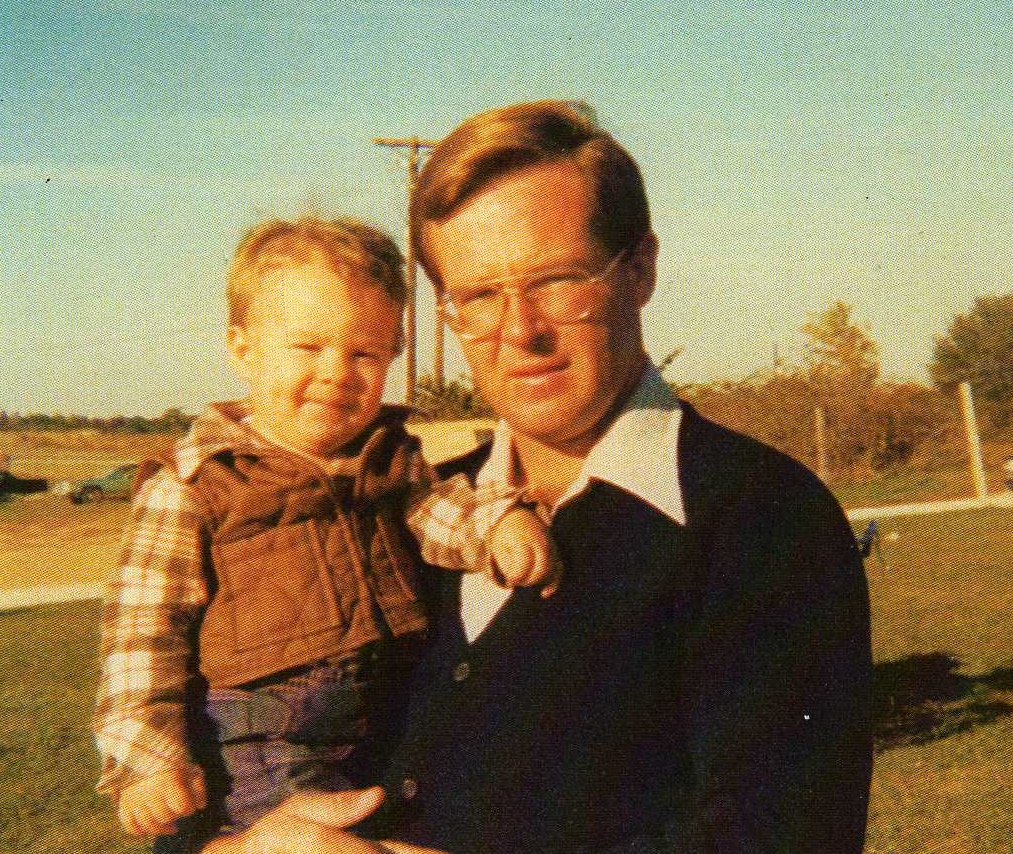
Luke Austin Daugherty & Dad, Joe Daugherty, in Sept. 1978

Luke Austin Daugherty & Dad, Joe Daugherty, in Sept. 1978

It is a hell of a thing to lose somebody you love deeply. And just with the passing of time, it doesn’t cease to be a hell of a thing. Time may knock the edges off of your hurt, but it never completely goes away. At least the hurt from losing my father hasn’t dissipated after six years. I don’t even think that is a bad thing.

I am very close to being finished with the final edit of “Love is the Middle: The True Story of a Father and Son.” For more information on the book, please visit this link to a previous blog: Love is the Middle: Thoughts on Finishing Draft One

I find that it is helpful when editing, not only to read the text through normally, but also once through aloud. Doing so, at least for me, forces a slower pace and I catch mistakes that I would otherwise miss.

With that in mind, I decided that for my out-loud reading of “Love is the Middle,” I would just read the book to my kids about a chapter per day over the course of a few weeks.As of today, we only have a few chapters left and I have enjoyed reading the story to them.

The chapter we read today was about when my dad told me that he had cancer and the three years leading up to his death. Reading that chapter to my kids, like several other sections of the book, was difficult. Since I wrote the entire book in a number of coffee shops, I was forced to visit many deep emotions in a public setting. It was one thing to write the book with all of my internal dialogue quietly being translated into text on a laptop by my fingers . But, I have found that vocalizing those same words to my children is quite a bit more difficult. I not only “think” the words, but hear my own words. The mere act of speaking some of the stories in the book versus only reading them has been quite a chore at times. But, I have managed through the book so far.

As I finished up today’s chapter, which included a story about the last full “normal” day I ever spent with my dad, reading became harder for me. Then, when I saw the next chapter to come, the one that tells the account of my dad’s death and the days surrounding it, I realized that I cannot do my duty tomorrow. When I only contemplated reading that chapter aloud, I quickly realized that it would be beyond the scope of my ability. Or, if not beyond my ability, beyond what I desire to do.

I suppose I will just let the kids read the rest of the book through on their own or perhaps my wife will read it to them. But, not me. It would just be too damn hard to speak all of the remaining words. Since I have not had much luck so far predicting how the book will hit me emotionally, I have no desire to break down crying like a child in front of my children. I think that would be the most likely outcome. Rarely do I hold back my emotions from my children, but some of them need to be for only me.

I hasten to complete and publish the book. I hope you will read and share it.

-Luke

Regarding My 37th Birthday and Walt Whitman’s “Song of Myself”

Luke Austin Daugherty on his 37th birthday.

Luke Austin Daugherty on his 37th birthday. -Photo credit: Nathanael Daugherty

I am a fresh 37 years old today. It is not a very impressive year in any obvious way. Not 30 or 40. Not even 35, splitting the difference between the two. Yet, I am now as happy and content as I recollect ever being on a birthday morning from a data set of thirty-seven. 

It has been an interesting experiment for me on several occasions to contrast myself at a particular age to a well-known person or a person I admire in some way. Due to the flapping of the butterfly’s wings and the serendipity of chance, I have occasion to do that today. Several weeks ago, Robin Williams took his own life, which caused me to reflect on how the movie, “Dead Poets Society,” had such an impact on me as a teenager. Reflecting on that movie brought Walt Whitman to mind, a favorite poet of mine. Yesterday, unrelated to the previous scenario, a friend on Facebook shared a list of questions given to Karl Marx by his daughters in 1865. I decided to write my own set of answers. In doing so, I needed to refer to, “Song of Myself,” by Walt Whitman, which had been brought to mind earlier this month by Robin Williams’s death. 

As I read the beginning of, “Song of Myself,” I realized that Whitman was writing the poem at the age of 37. Toward the beginning of the poem, Whitman mentioned his age specifically and that he was in good health. I wondered if he actually wrote it on his own birthday or at least started the poem then, since it is fairly long. Being one day shy of 37 when I noticed that yesterday, I committed to myself to revisit Whitman and his poem today, on my 37th birthday. That may seem the long way around to arrive at this point in my birthday blog, but it has always interested me how the laws of cause and effect operate in one’s life. 

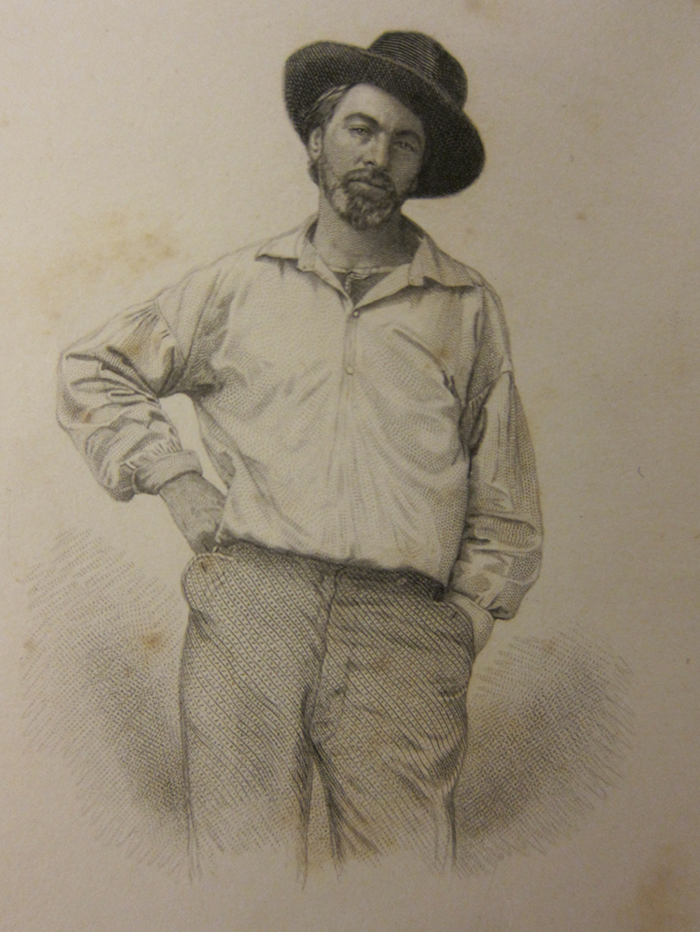
Walt Whitman at approximately my own present age

Walt Whitman at approximately my own present age

I suppose the greatest commonality I share with Whitman is that we’re both (or rather, he was and I am) a scripturient. Aside from that, we share indie/self-published author status. I have always admired the fact that he published, “Leaves of Grass,” on his own dime. Thus far, every album and book I have published has been done the same way. I don’t even know if I would want to change that. I am feverishly territorial and independent about my writing and process. Both Whitman and I are beardy men. (I reckon I’ll just speak of him as though he was in the present tense for sake of ease and simplicity) I have had a much more epic beard previously than I do now. I am currently trimming it at a #4 length and it used to be several inches long. It seems, by the available pictures, that Whitman’s beard grew in length as he grew more long in the tooth. 

“Song of Myself,” has been oft criticized for more than a century as the most egotistical poem ever written. Even if that were true, I do not see it as a negative. It isn’t a bad thing to love one’s own self, so long as it doesn’t lead to narcissism, spite for others, or destructive selfishness. I think it takes several decades of life to learn to really love yourself well and independent of the critique of others. I believe that it is very difficult to love others properly without loving one’s self first. A self-hater rarely finds anything untainted to offer a fellow human, even when he or she would like to. So, I hold no penalty toward Whitman for esteeming himself well. Loving yourself also does not have a direct correlation to degrading others or celebrating them less in proportion. Perhaps the opposite tends to be the rule. 

Below are just a few selected lines from, “Song of Myself,” which I most relate to or find inspirational now in my own 37th year as Whitman was when he wrote them.

“I, now thirty-seven years old in perfect health begin, Hoping to cease not till death.”

“Stop this day and night with me and you shall possess the
     origin of all poems,
You shall possess the good of the earth and sun, (there are
     millions of suns left,)
You shall no longer take things at second or third hand, nor
     look through the eyes of the dead, nor feed on the
     spectres in books,
You shall not look through my eyes either, nor take things
     from me,
You shall listen to all sides and filter them from your self.”

“These are really the thoughts of all men in all ages and lands,
     they are not original with me,
If they are not yours as much as mine they are nothing, or
     next to nothing,”

“Have you heard that it was good to gain the day?
I also say it is good to fall, battles are lost in the same spirit in
  ”   which they are won.”

“I exist as I am, that is enough,
If no other in the world be aware I sit content,
And if each and all be aware I sit content.

One world is aware and by far the largest to me, and that is
     myself,
And whether I come to my own to-day or in ten thousand or
     ten million years,
I can cheerfully take it now, or with equal cheerfulness I can
     wait.” 

“I seize the descending man and raise him with resistless will,
O despairer, here is my neck,
By God, you shall not go down! hang your whole weight
     upon me.”

“Do I contradict myself?
Very well then I contradict myself,
(I am large, I contain multitudes.)” 

For the complete text, please visit this link:

“Song of Myself,” by Walt Whitman

Why I’m More Happy Than Sad Thinking About Robin Williams Today

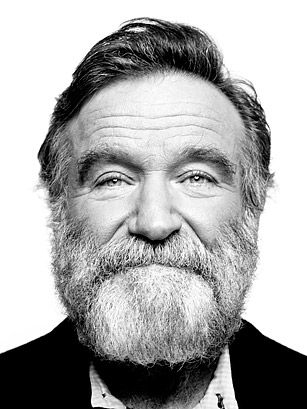
robin williams (My favorite picture of Mr. Williams)

In complete transparency, I must admit, I had not specifically thought of Robin Williams in some time prior to last night. I came home after taking my teenage sons out to a late dinner and jumped on Facebook to see all the posts about Mr. Williams’ death and suspected suicide. There are so many fake celebrity death stories that I do not believe them at first anymore as a general rule. I wait until I see the story on several credible news outlets before accepting any celebrity’s death as having actually happened. Morgan Freeman has died too many times for me to do otherwise.

So, when I saw that Robin had really died and apparently committed suicide, I was very saddened about the news and remain so at this moment. I then started considering when the last time I had thought about him was. I concluded that it was a little over a month ago when I watched, “The Final Cut,” with my family. That is one of my favorites out of his many films. I suppose if I had to pic a “Top 5” in order, they would be: 1. Dead Poets Society 2. One Hour Photo 3. The Final Cut 4. World’s Greatest Dad 5. (Damn, this is a hard one because there are twenty movies that rival for this spot as I force myself to choose) Awakenings.

When I consider Robin’s death today, I take no thought for being perceived as on any bandwagon for talking about him just because he died. It is only human for us to consider the lives of people after they have died more than when they were alive. The sudden punctuation at the end of their life’s sentence provokes us to thoughts of the brevity of life and the utter value of what we leave behind as our legacy. We then reflect on the now deceased person’s legacy as well and their impact on us.

I will only speak of his death in brief. The word at the moment is that he committed suicide due to a life-long battle with alcoholism and depression. Whether he took his own life is his business. Since I have not suffered the grip of depression in my own life personally, I cannot speak on depression with any authority and would only be talking out of my ass. I have no personal experience to offer. I am grateful for that and say it with humility. I have deep empathy for my friends who deal with depression and hope to be of some service to them. Had I dealt with the difficulties Robin had, I would likely not have dealt with them as well as he did nor for as long. I may well have given into the despair and killed myself way before the age of 63 for all I know. If he did in fact take his life, I regret that being the case and wish it would not have been. Though, my wishes do no actual good in retrograde. For any readers dealing with depression presently, I can only say that you are inherently valuable and please seek help from those who love you or capable professionals who care. If you need to talk to someone and are in the U.S., PLEASE call 1-800-273-8255 for the National Suicide Prevention Lifeline.

That said, my present sadness over Robin’s death is overshadowed by an overwhelming joy and personal thankfulness when contemplating his life. Not only was he an amazing, rare, capable, insightful, and staggeringly talented actor, a man who gave his whole self to his art, a man who cheered up our service men and women abroad, a husband to several women, and father to several children; he had a specific and direct impact on me personally.

I am a poet and a writer. From the time I was a child, I wrote. When I was in high school, I had one teacher who I felt “got me.” He was my literature teacher, Mr. Wilson. As part of our literature class one semester, Mr. Wilson had us all watch, “Dead Poets Society,” over several class periods. I was hypnotized by the story and the characters. Robin Williams’ character as the amazing teacher spoke right to me as though he was in the room before my own school desk. The challenges, insights, and inspiration of Robin’s character in that movie, an extension of his own self, impacted me in an irreversible way as a teenager and young writer. The ripples of that impact are still rolling through me in untold ways. They are part of who I am as a writer and a human today and cannot be understated.

Robin Williams made more people laugh, cry, and think deeply than I can ever hope to in my lifetime I believe. Yet, his path was his and mine is mine. I can only stand in awe of who he was and the incredibly vast and deep body of work he left behind. That is why I am infinitely more happy than sad today when contemplating him. Whether he died yesterday or twenty years from now, like every other human being, death was imminent for him. But, what he did with his life across the years was not destiny. Robin lived in an effectual way and left it all on the table. He chose to open a vain and bleed for us via the amazing characters he played over the decades. He left us in tears of laughter through his unique stand-up comedy. He did not just write a verse with his life, he wrote volumes. I happily behold them, thank Robin for his impact on me and this world, while admiring him as much as I could any actor, comedian, or artist. If he did take his life, I do not condemn him for it. He dealt with struggles that I have not. I cherish him for how he lived his life up to that point. I hope myself to write a verse worth reading with my own life and will take the weighty question of teacher, John Keating, in, “Dead Poets Society,” to heart… “What will your verse be?”

http://https://www.youtube.com/watch?v=R_zsMwCOoEs